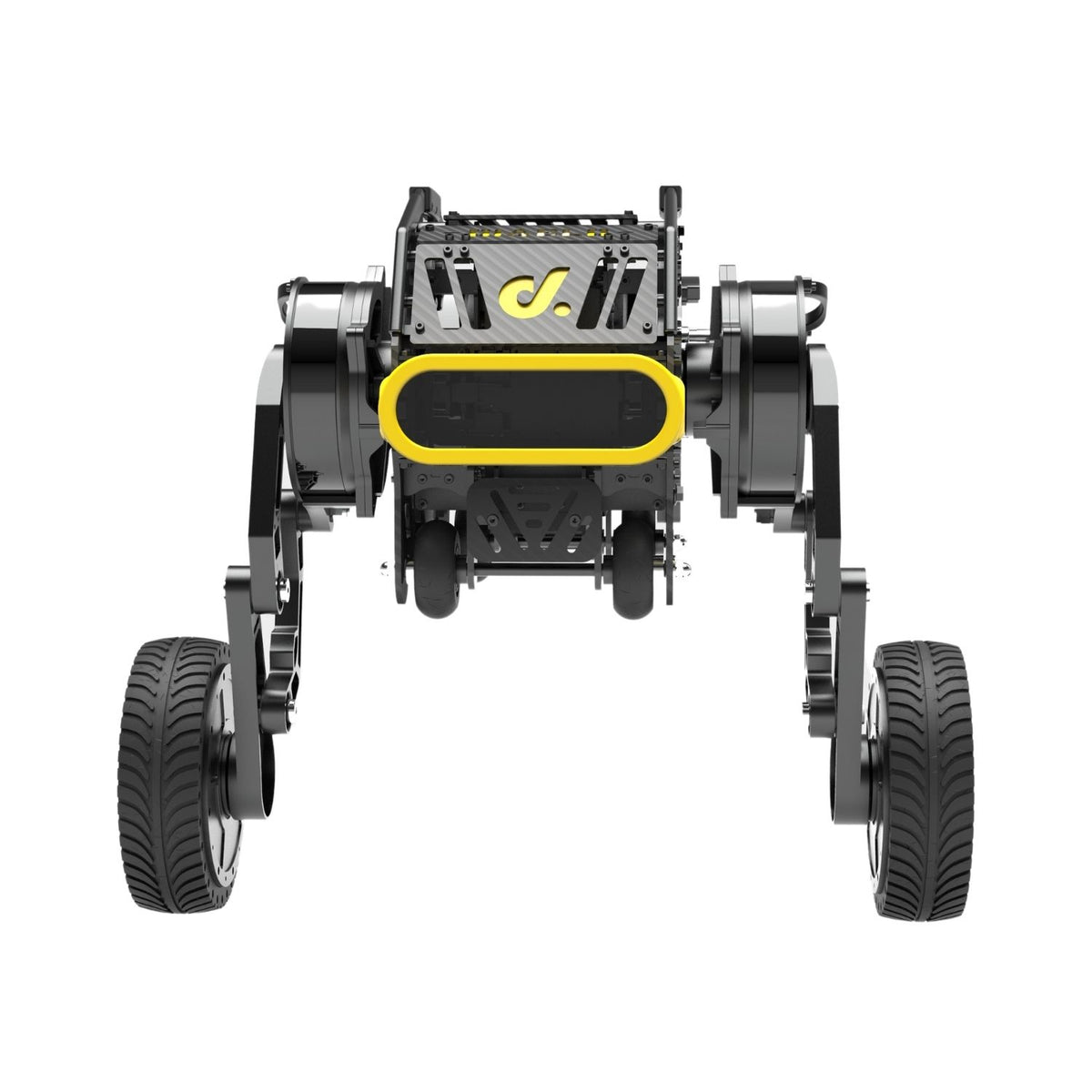
An open development robot platform should combine modular hardware, open software, AI computing support, simulation tools, and accessible documentation. A practical platform needs ROS 2 compatibility, multiple sensor interfaces, expandable mechanical structures, and cloud-based collaboration features. By 2025, more than 70% of academic robotics projects use open-source frameworks such as ROS, showing the demand for flexible development environments. Platforms supporting mobile robots, robotic arms, and autonomous systems should allow developers to move from simulation to real deployment with fewer hardware changes and shorter development cycles.
Robotics development has changed from building isolated machines into creating reusable systems. Traditional robot products often provide fixed functions, while open development platforms allow users to modify hardware, software, and algorithms according to different applications. A university robotics laboratory, for example, may use the same mobile base for navigation research, warehouse automation studies, and human–robot interaction projects by replacing sensors and software modules instead of purchasing new equipment.
“An open platform is designed around adaptation. Developers should be able to replace parts, test new algorithms, and share improvements without rebuilding the entire robot.”
The hardware structure determines how easily a robot can be expanded. A useful platform usually adopts a modular design with standardized mounting points, removable components, and clear electrical interfaces. Many research platforms released after 2020 use aluminum frames, quick connectors, and interchangeable sensor mounts because these designs reduce modification time by approximately 30% to 50% compared with fixed structures.
A complete hardware architecture usually includes:
| Component | Typical Requirement |
|---|---|
| Mechanical frame | Modular parts with CAD files |
| Motor system | Support for different actuators and controllers |
| Computing unit | Embedded processors or AI acceleration modules |
| Battery system | Replaceable power modules |
| Communication interface | CAN, Ethernet, USB, UART, Wi-Fi |
Hardware openness also depends on access to design information. When users receive mechanical drawings, circuit diagrams, and component specifications, they can create new attachments or repair systems independently. Platforms used in robotics education often provide more than 100 downloadable resources, including assembly guides, software examples, and 3D models.
The flexibility of hardware creates new requirements for computing systems. Modern robots process large amounts of data from cameras, LiDAR, force sensors, and environmental sensors. A robot equipped with a single camera may generate hundreds of megabytes of image data every minute, while autonomous navigation systems often require real-time processing within milliseconds.
Open development platforms commonly separate computing tasks into two layers. Low-level controllers manage motor speed, position control, and safety monitoring, while higher-level computers handle artificial intelligence functions.
| Computing Layer | Main Tasks |
|---|---|
| Microcontroller | Motor control, sensor reading, safety functions |
| Embedded computer | Navigation, vision processing, AI models |
| Cloud system | Data storage, remote management, model training |
This structure allows developers to upgrade computing modules without replacing the entire robot. Since 2018, platforms using NVIDIA Jetson devices and similar AI computers have become common in research because they support deep learning models while maintaining compact size and low power consumption.
Software openness determines whether developers can create new applications efficiently. Most research-oriented robot platforms now support ROS 2 because it provides standardized communication between sensors, controllers, and applications. According to ROS community statistics, thousands of packages are available for navigation, perception, manipulation, and simulation.
A complete software environment should provide:
-
Robot drivers for different hardware modules
-
API interfaces for application development
-
Navigation and control examples
-
Sensor processing libraries
-
AI model deployment tools
“Developers should spend more time creating new robot functions and less time connecting basic hardware components.”
Simulation capability has become a normal part of robot development. Physical testing requires equipment, space, and maintenance, while simulation allows developers to evaluate algorithms before using real machines. Modern platforms often connect with Gazebo, Webots, or NVIDIA Isaac Sim to create virtual testing environments.
A simulation system should reproduce:
| Simulation Element | Purpose |
|---|---|
| Robot model | Testing mechanical behavior |
| Virtual sensors | Evaluating perception algorithms |
| Digital environments | Testing navigation methods |
| Physics engine | Checking movement accuracy |
For autonomous robots, simulation can generate thousands of training scenarios. A navigation algorithm may be tested in hundreds of virtual rooms with different layouts, lighting conditions, and obstacle positions before deployment. This approach has been widely used for applications including autonomous warehouse systems and robots for inspection and delivery.
Sensor compatibility is another requirement for open platforms. Robots used in real environments need information from multiple sources because no single sensor can provide complete environmental understanding.
Common sensor combinations include:
| Sensor | Application |
|---|---|
| RGB camera | Object recognition and visual inspection |
| Depth camera | Three-dimensional measurement |
| LiDAR | Mapping and obstacle detection |
| IMU | Motion estimation |
| Force sensor | Physical interaction |
The ability to connect different sensors allows one platform to support many fields. For example, an inspection robot may use LiDAR for navigation, cameras for equipment monitoring, and temperature sensors for industrial checks. A delivery robot may use similar hardware but require different software modules.
Communication standards also influence system expansion. Open platforms normally support CAN bus, Ethernet, USB, and wireless communication because developers often combine components from different manufacturers. Standard interfaces reduce integration time and allow researchers to replace individual modules when new technologies become available.
Documentation and learning resources are necessary for wider adoption. A robot platform with incomplete instructions creates unnecessary development delays. Professional platforms usually provide step-by-step assembly manuals, programming examples, troubleshooting documents, and community forums.
A useful documentation package may include:
-
Hardware installation guide
-
Software setup instructions
-
Example source code
-
API references
-
Simulation tutorials
-
Maintenance information
Educational users often depend on example projects. A beginner may start with motor control, then progress to camera recognition, mapping, and autonomous movement. Structured materials help users understand the relationship between hardware and software instead of only operating finished systems.
Community support further improves platform development. Open-source robotics communities allow users to share drivers, algorithms, and application examples. Platforms with active communities often receive improvements from thousands of developers worldwide. For example, ROS-related projects have contributors from universities, companies, and independent developers across many countries.
Safety functions must also be included when robots operate near people. A development platform should provide emergency stop functions, motor current monitoring, speed limits, and collision protection. Collaborative robot applications introduced after 2015 have increasingly focused on safe operation because robots are moving from controlled industrial spaces into offices, hospitals, warehouses, and public areas.
An expandable robot platform should also support future upgrades. Processor performance, AI models, and sensors improve quickly, so a platform designed in 2020 should still accept new components several years later. Modular structures, open interfaces, and software compatibility help extend the useful period of a robot system.
Many open platforms now combine hardware, software, and online resources into complete ecosystems. Developers can purchase basic robot structures, add customized modules, download software packages, and share improvements through online communities. For users interested in ready-to-use robotic solutions, platforms offering different robot categories and development options are available through suppliers such as robot platforms and development robots.
Future robot platforms will continue moving toward greater openness, allowing more developers to participate in robotics research and product development. Systems that provide flexible hardware, accessible software, realistic simulation, and strong community resources will support applications ranging from education and research to industrial automation and service robotics.